Between the Numbers Week 2 / 2026
Seven snaps.
Two touchdowns.
Cody White’s seven-snap cameo, Corum’s bigger role, Henry’s missing carries. Thirteen things you might have missed in Week 2.
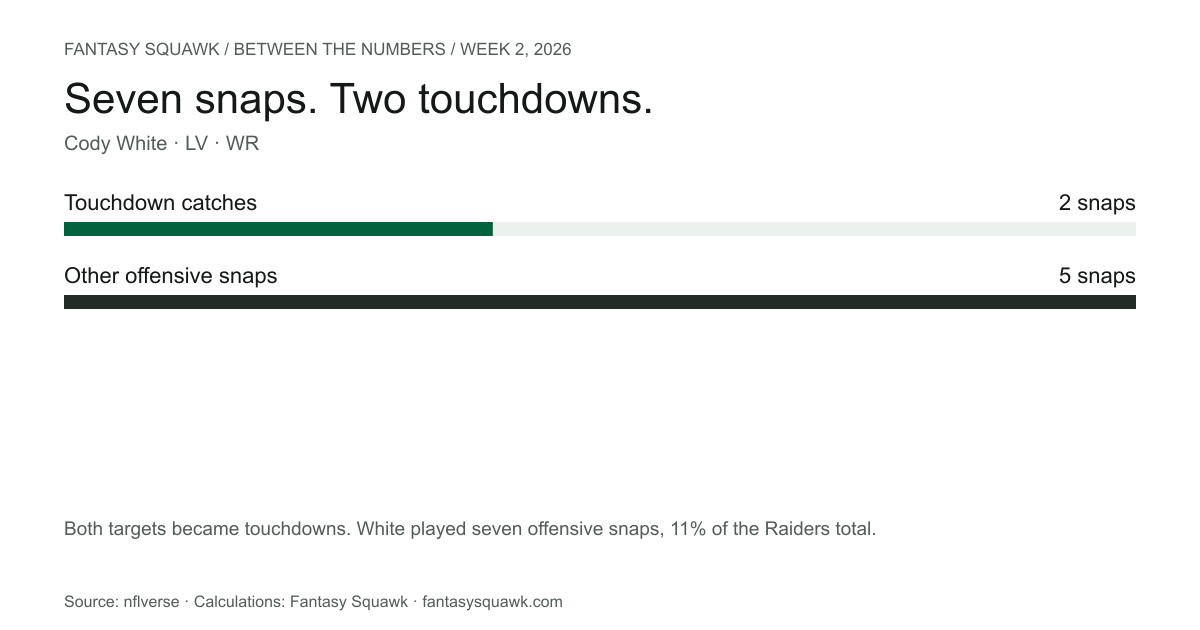
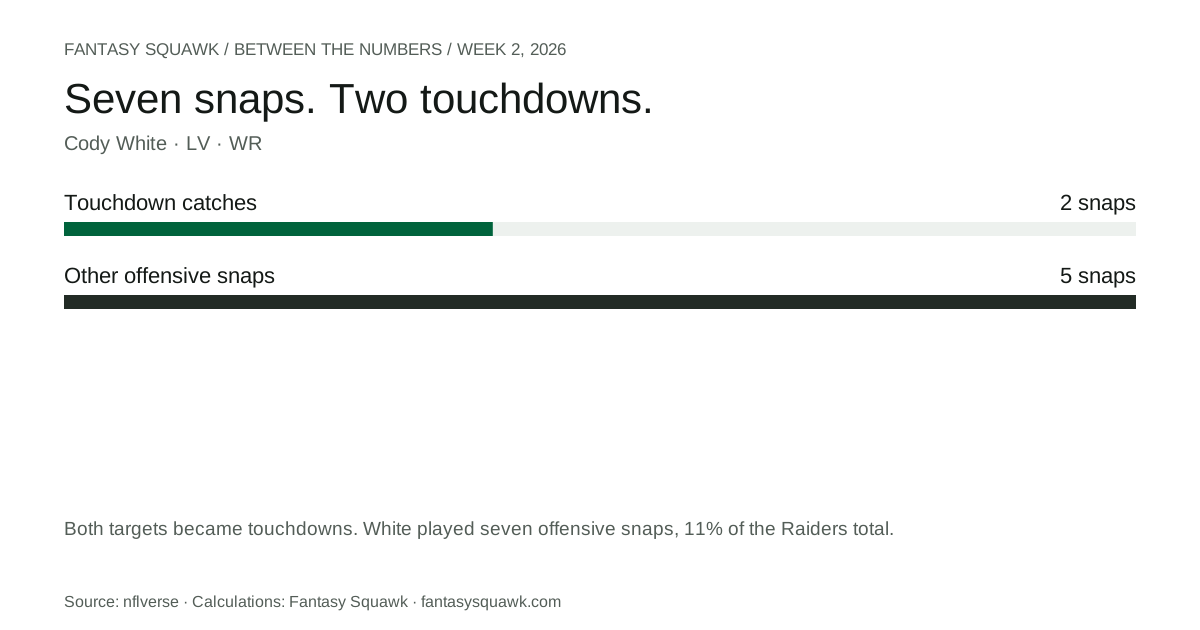
Cody White played seven snaps. Two were touchdowns.
Two targets, two catches, two touchdowns. The Raiders receiver did all of that while playing just 11% of the offensive snaps against the Chargers. Pretty efficient afternoon at the office.
These were his first two catches as a Raider. One put Vegas ahead in the third quarter; the other stretched a three-point lead to nine late in the fourth. Terrific cameo. Seven snaps is also a good reason to pause before chasing the fantasy score.
See the numbers
Seven snaps. Two touchdowns.
Both targets became touchdowns. White played seven offensive snaps, 11% of the Raiders total.
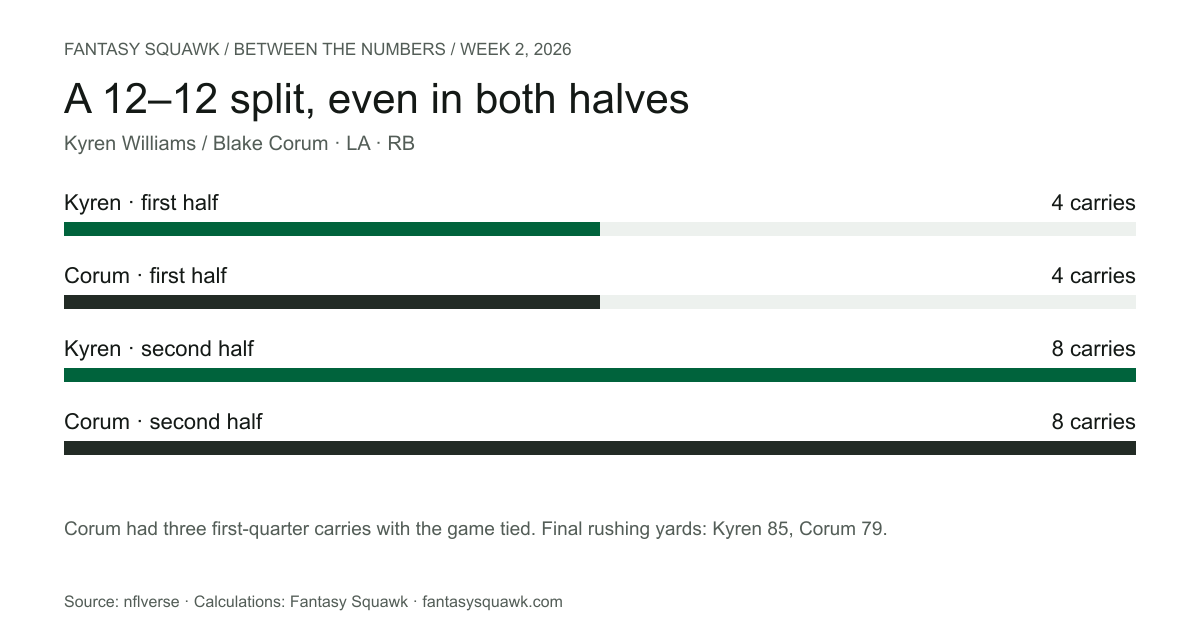
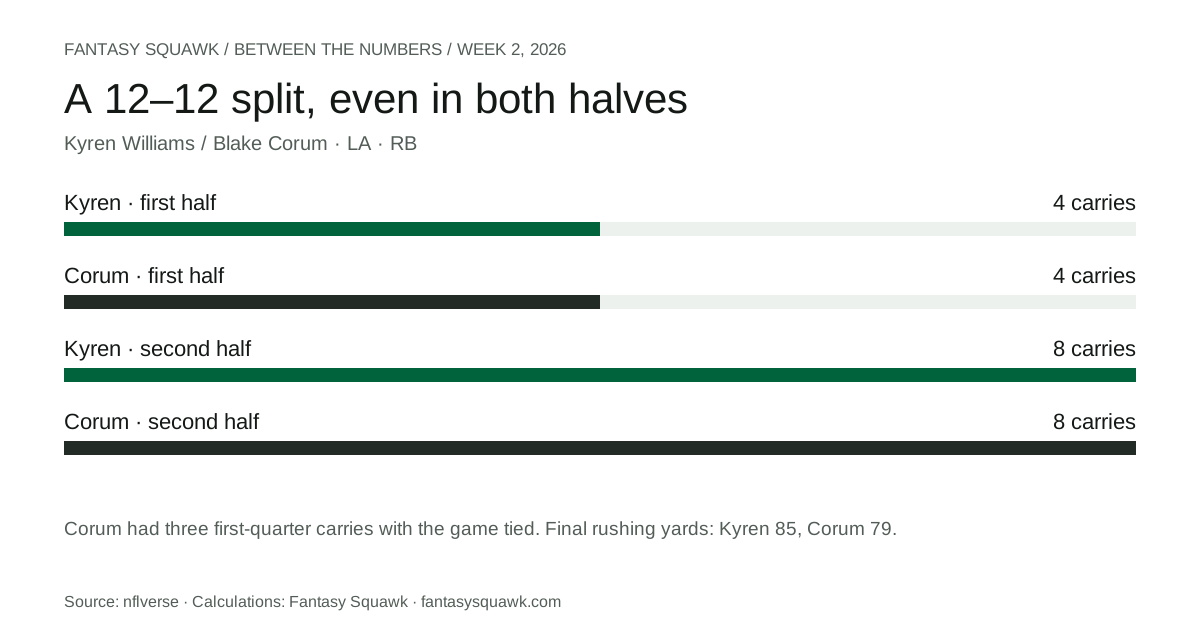
Corum and Kyren split the carries 12–12. It was already even at halftime.
Four carries each before halftime. Eight each after it. Blake Corum's work against the Giants started well before the Rams had a comfortable lead: three of his carries came in the first quarter at 0–0.
Kyren Williams still played more snaps, 34 to 28, and caught a touchdown. But Corum finished only six rushing yards behind him, 85–79. That's a much more involved backup than the fantasy scores alone suggest.
See the numbers
A 12–12 split, even in both halves
Corum had three first-quarter carries with the game tied. Final rushing yards: Kyren 85, Corum 79.
Jonah Coleman went from zero carries to closing out a win.
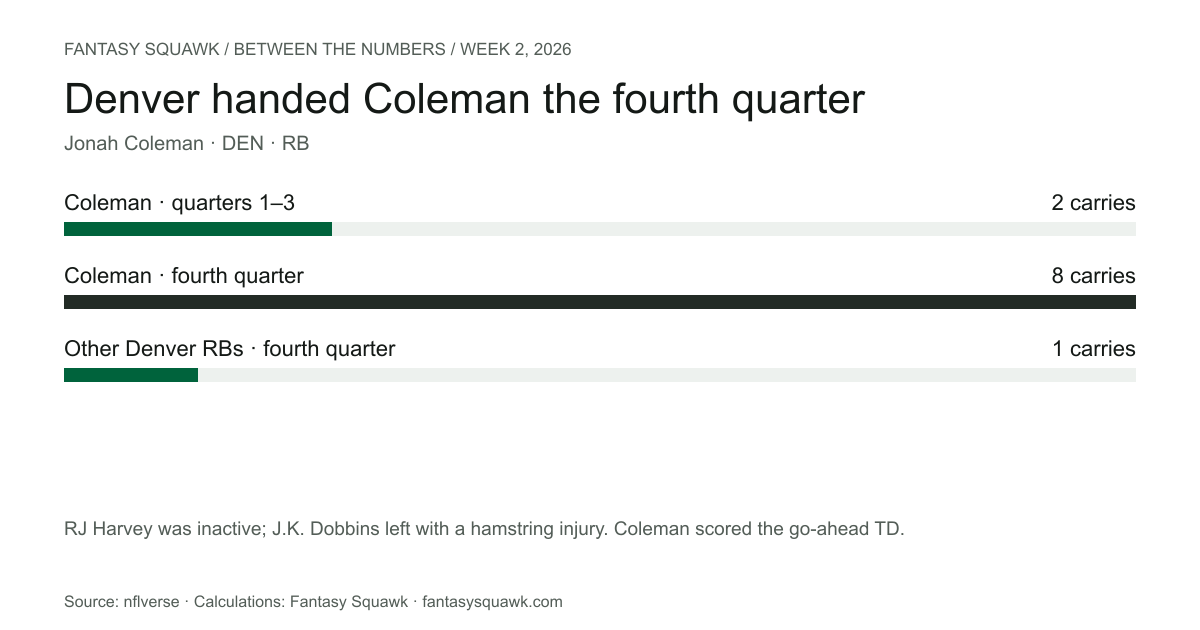
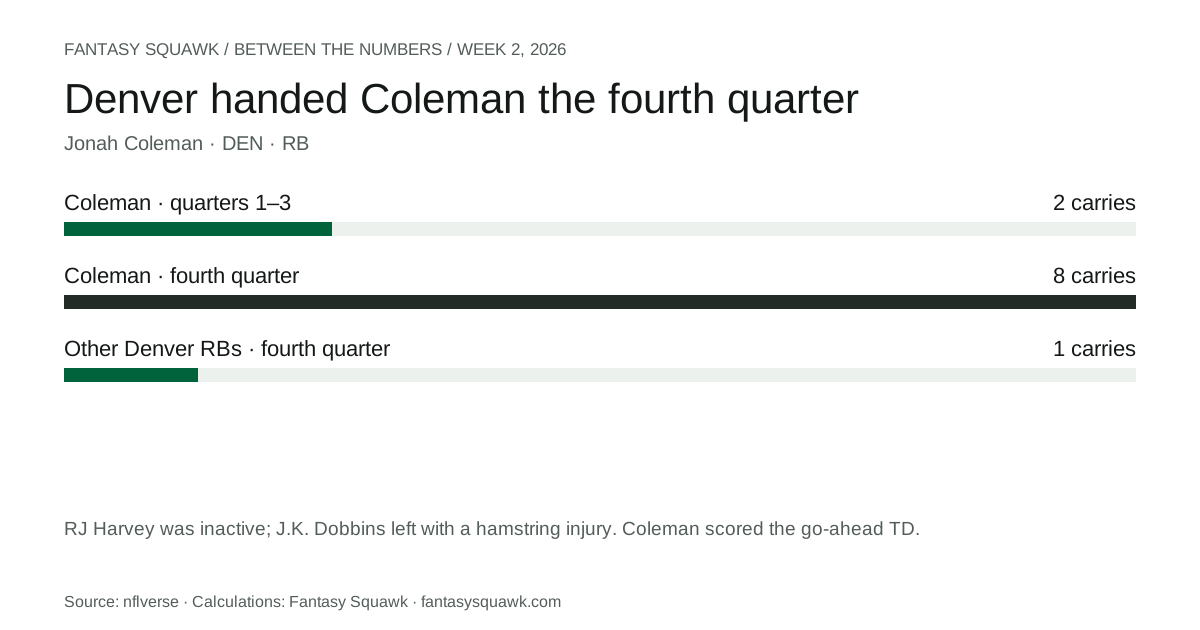
No carries in Week 1. Eight of Denver's nine fourth-quarter RB carries in Week 2. The rookie scored the go-ahead touchdown, then got all six handoffs on the possession that ran out the clock against Jacksonville.
There's an injury story here: RJ Harvey was inactive, and J.K. Dobbins left with a hamstring injury. Coleman finished with 10 carries, the same as Dobbins. That even split hides who was available at the end—and who Denver trusted to finish it.
See the numbers
Denver handed Coleman the fourth quarter
RJ Harvey was inactive; J.K. Dobbins left with a hamstring injury. Coleman scored the go-ahead TD.
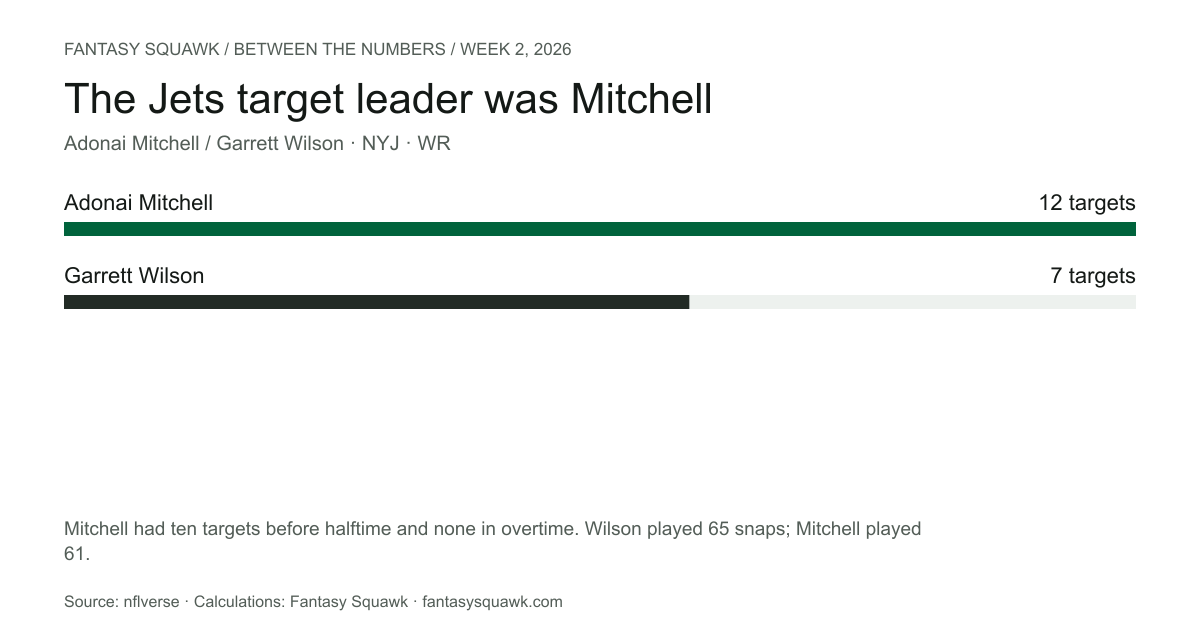
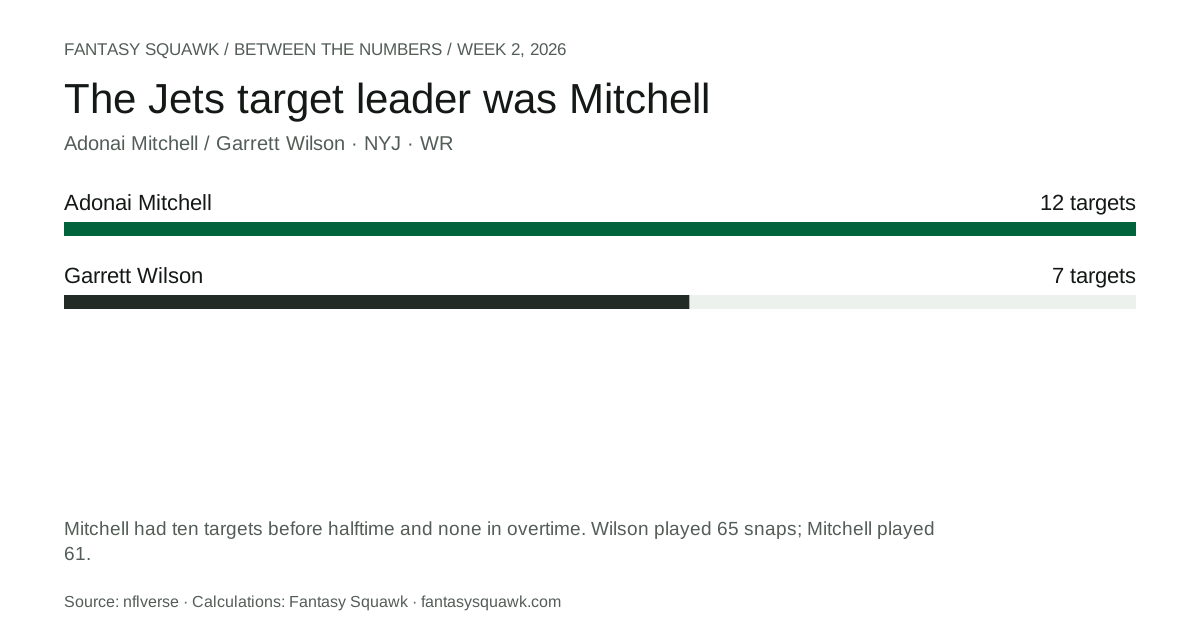
Adonai Mitchell got 12 targets. Garrett Wilson got seven.
Mitchell had 10 targets before halftime. He finished with six catches for 63 yards, an ordinary-looking line that hides how often Geno Smith looked his way against Green Bay.
Wilson was out there: 65 offensive snaps to Mitchell's 61. And none of Mitchell's targets came in overtime. His targets jumped from three to 12 in a week; Wilson stayed at seven. One game doesn't settle the pecking order, but that's a lot of attention for the other Jets receiver.
See the numbers
The Jets target leader was Mitchell
Mitchell had ten targets before halftime and none in overtime. Wilson played 65 snaps; Mitchell played 61.
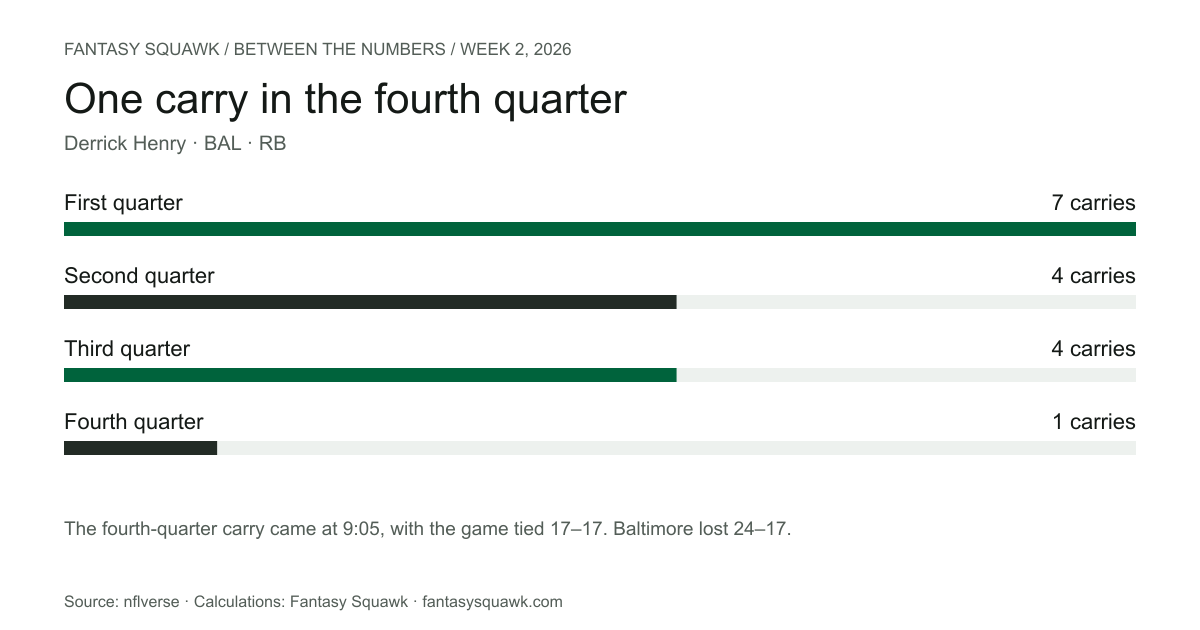
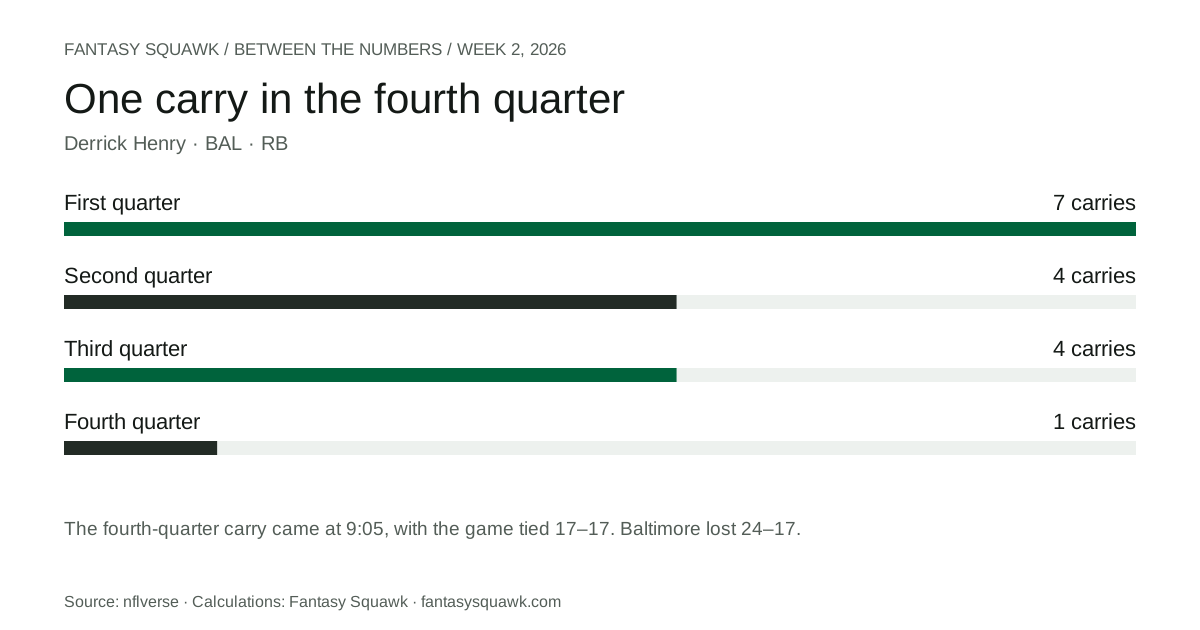
Derrick Henry got one fourth-quarter carry. The game was tied.
Henry's only fourth-quarter handoff came with 9:05 left and the score 17–17. He gained two yards. That was his last touch of the afternoon.
Baltimore had led at halftime, but Henry went from 11 first-half carries to five in the second half of a 24–17 loss. He scored early enough to make the fantasy line look decent. Anyone waiting for the usual late dose of Henry kept waiting. NFL.com's game recap also called out the disappearing run game.
See the numbers
One carry in the fourth quarter
The fourth-quarter carry came at 9:05, with the game tied 17–17. Baltimore lost 24–17.
Dalton Schultz outgained Houston's entire WR room.
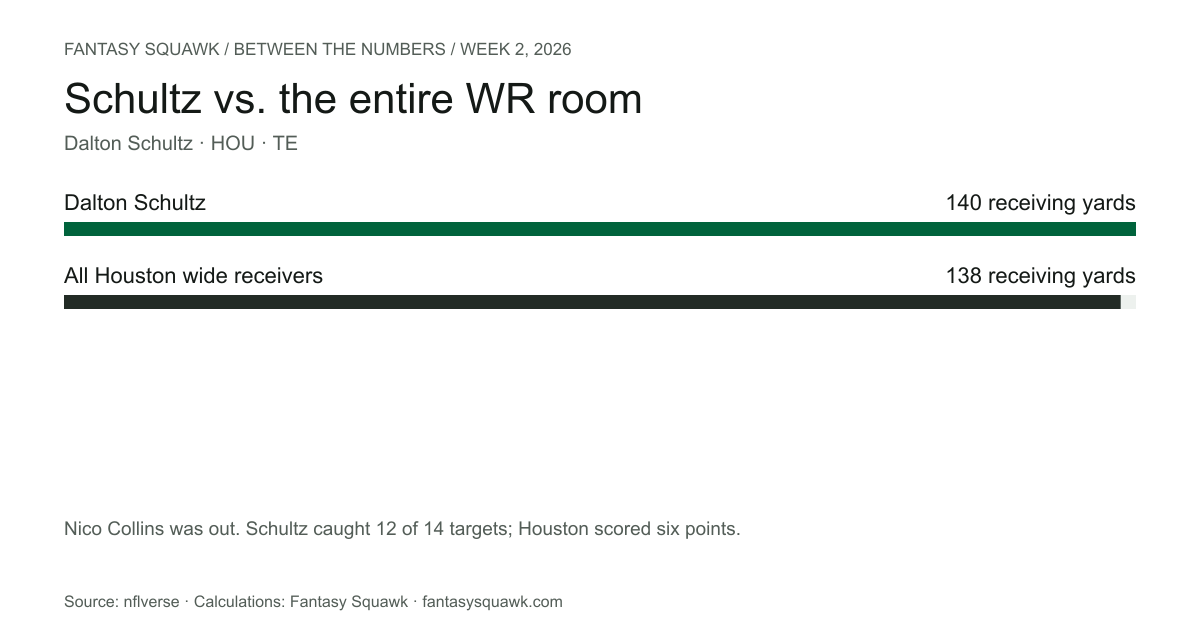
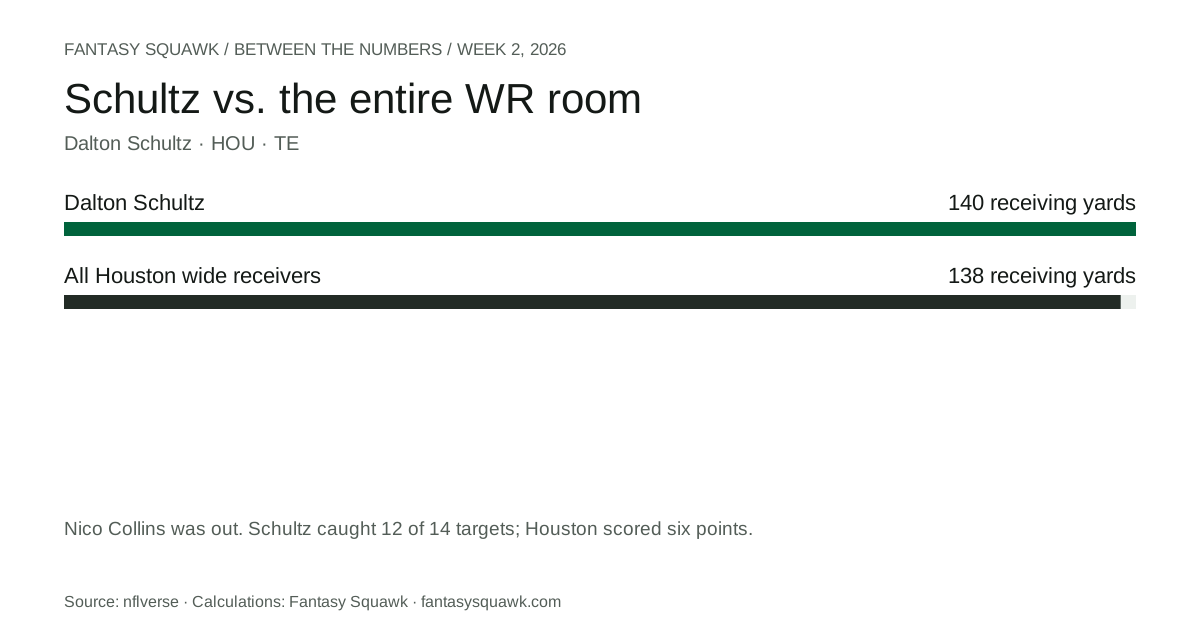
Schultz: 140 receiving yards. Every Texans wide receiver combined: 138. With Nico Collins out, Houston's tight end caught 12 of his 14 targets against Cincinnati.
The Texans scored six points. Schultz had a 26-point afternoon in full PPR without a touchdown. If you had him in your lineup, that game was considerably more enjoyable for you than it was for a Texans fan. NFL.com's recap fills in the grim offensive details.
See the numbers
Schultz vs. the entire WR room
Nico Collins was out. Schultz caught 12 of 14 targets; Houston scored six points.
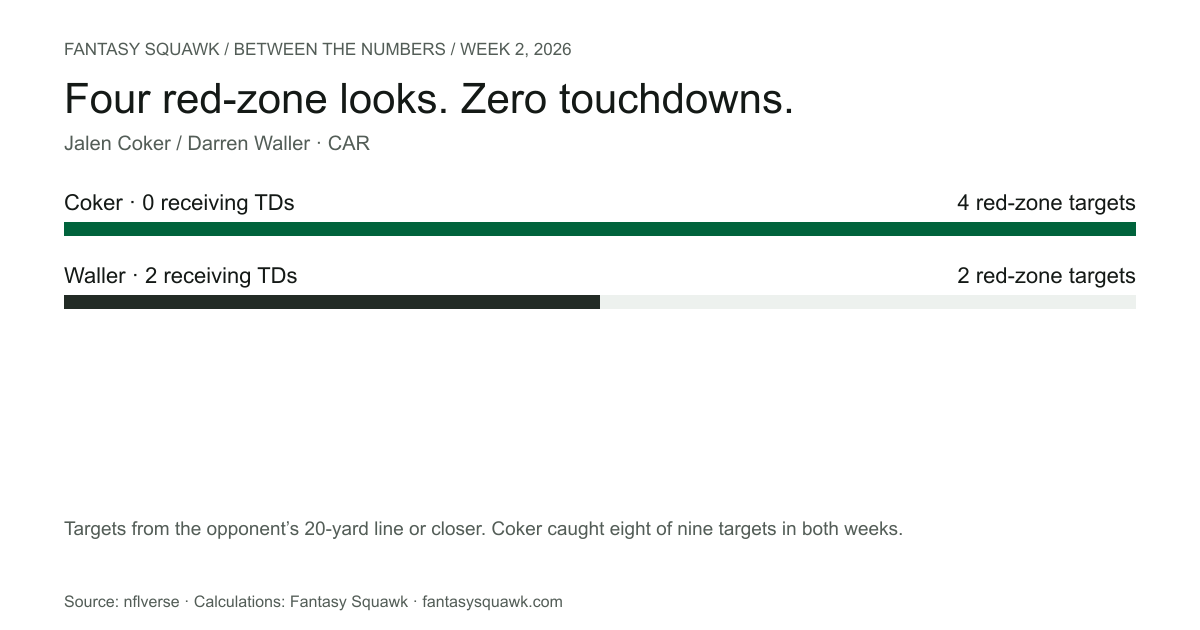
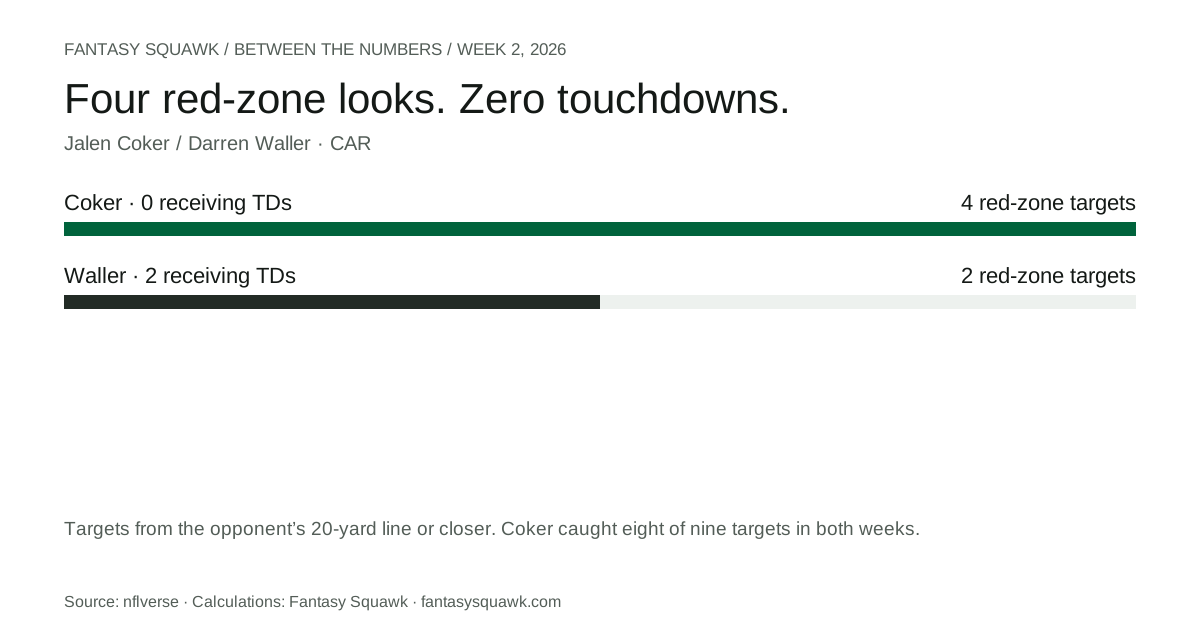
Coker got twice Waller's red-zone targets. Waller got both touchdowns.
Jalen Coker had four targets inside Atlanta's 20 and no touchdowns. Darren Waller had two and scored on both. If you only checked who scored, you'd miss who kept getting chances.
Coker caught eight of nine targets for the second straight week. The yardage fell from 138 to 66, and last week's two touchdowns became zero. Plenty changed on the fantasy scoreboard; his target and catch totals were identical.
See the numbers
Four red-zone looks. Zero touchdowns.
Targets from the opponent’s 20-yard line or closer. Coker caught eight of nine targets in both weeks.
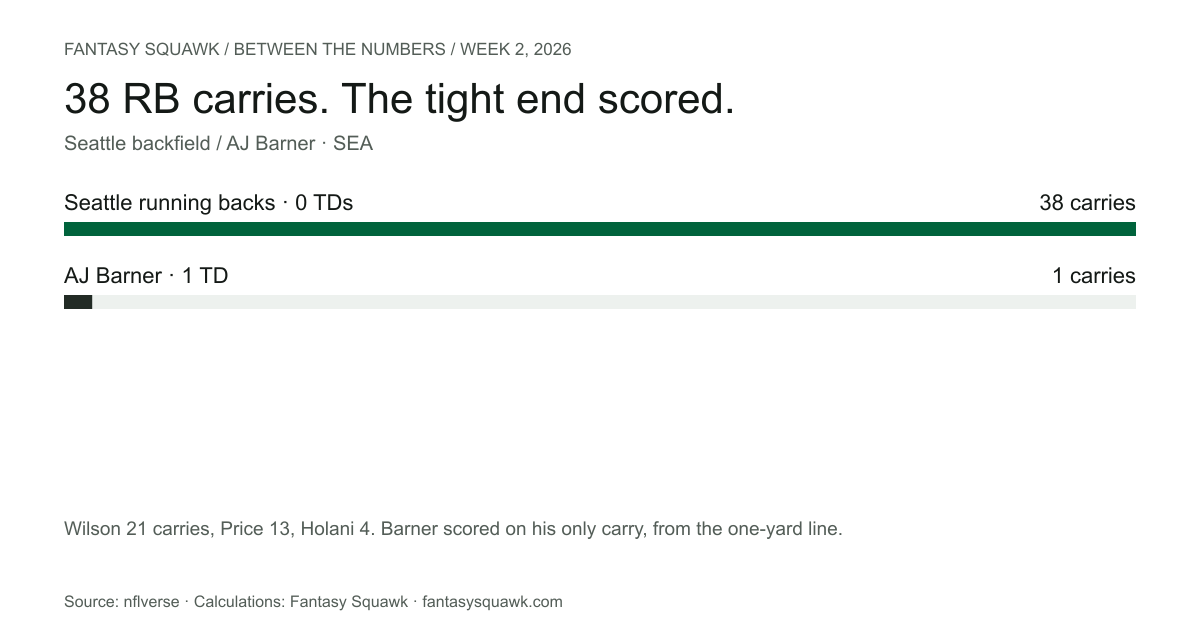
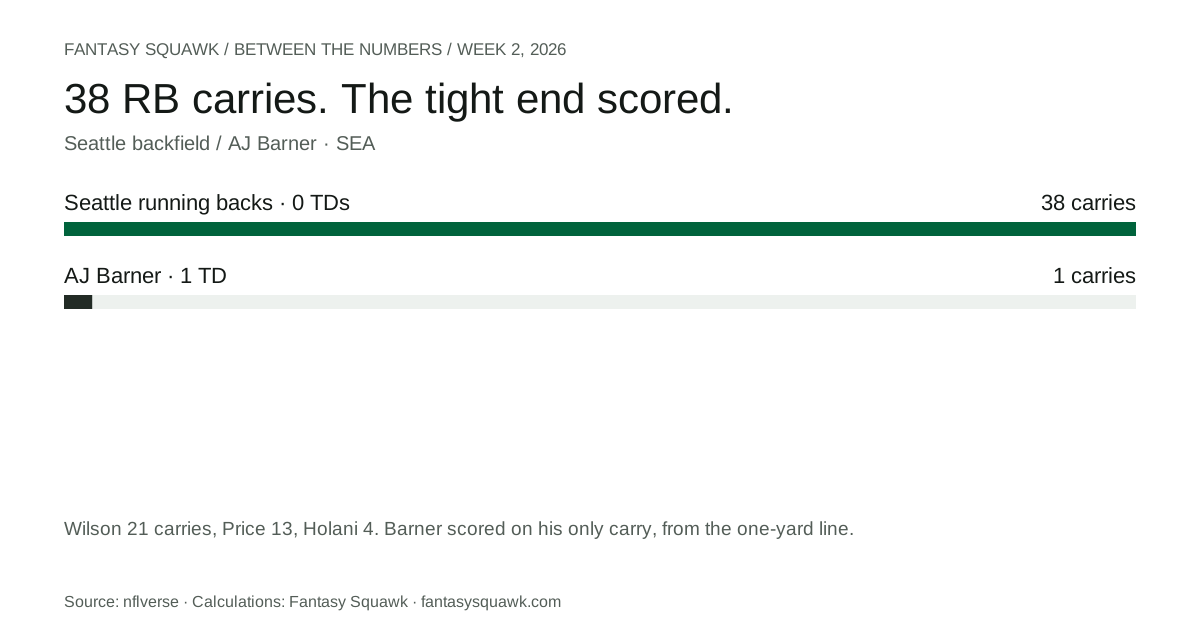
Seattle's RBs got 38 carries. A tight end got the rushing TD.
Emanuel Wilson, Jadarian Price and George Holani combined for zero rushing touchdowns. AJ Barner scored on his only carry. Seattle won 31–7, so there were plenty of points to go around. Just not that way.
Wilson had 21 carries, including four from inside the five, and finished without a score. Barner took his handoff at the one. An especially annoying box score if you'd correctly picked the busiest Seahawks back.
See the numbers
38 RB carries. The tight end scored.
Wilson 21 carries, Price 13, Holani 4. Barner scored on his only carry, from the one-yard line.
Terrance Ferguson finished one target behind Davante Adams.
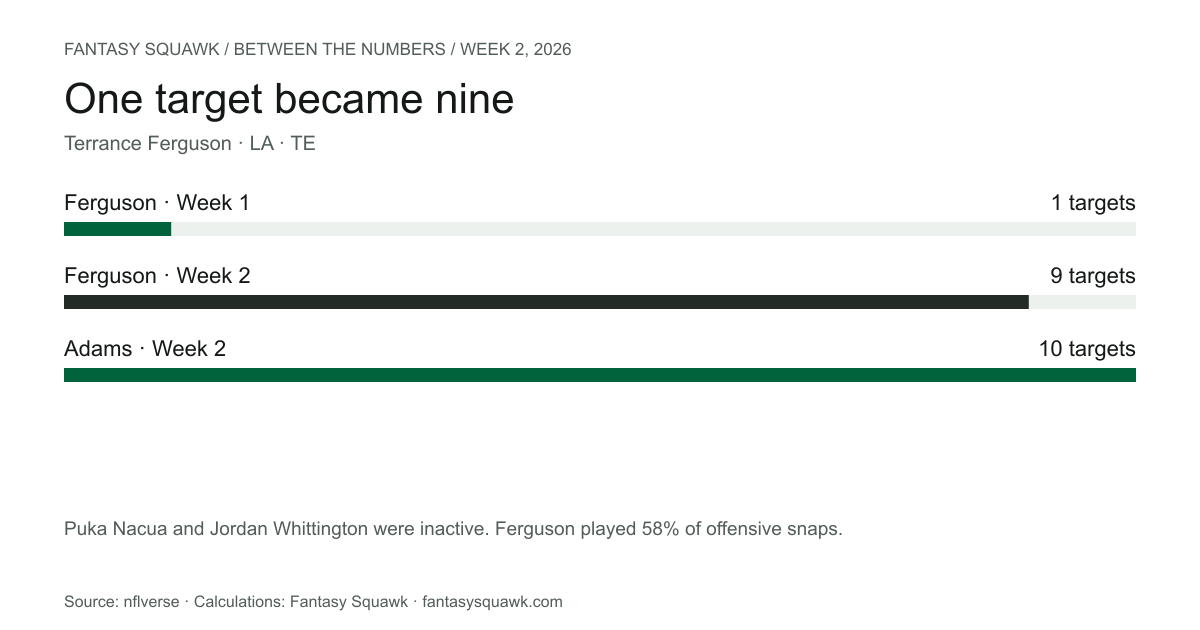
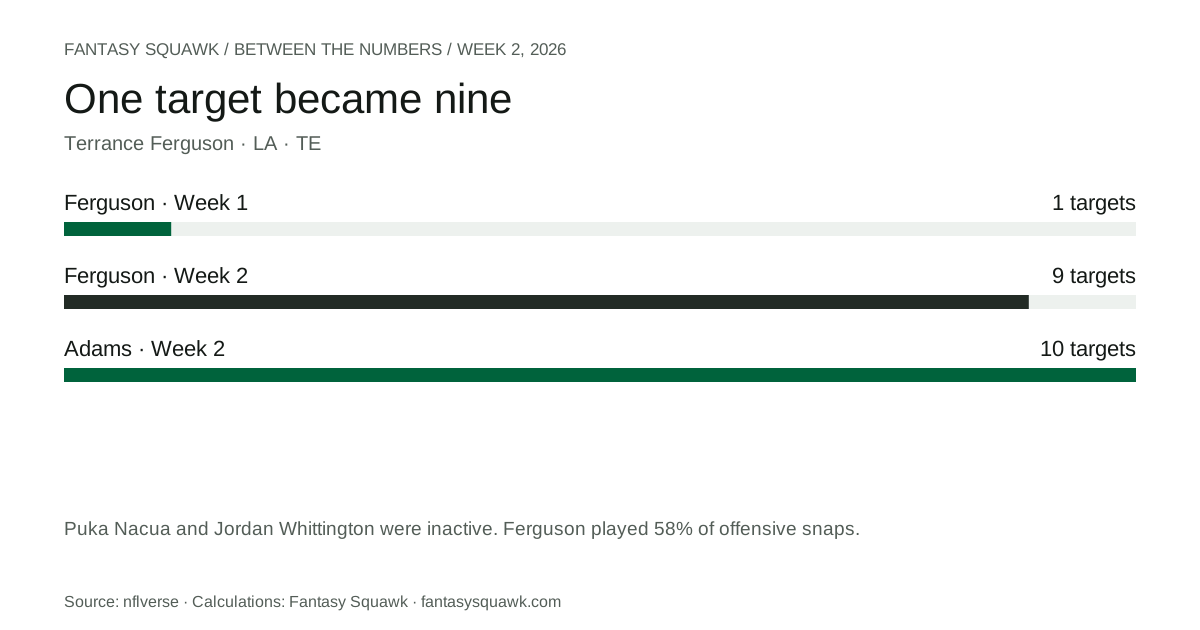
Adams got 10 targets. Ferguson got nine, up from one in Week 1. While Adams was putting up 195 yards, the Rams' tight end quietly caught six passes for 54 yards and a touchdown.
Puka Nacua and Jordan Whittington were both out. Ferguson's snap share only moved from 51% to 58%, so this wasn't simply a player finally getting on the field. Stafford was looking for him a lot more often when he was there. What survives the receivers' return is the part to watch.
See the numbers
One target became nine
Puka Nacua and Jordan Whittington were inactive. Ferguson played 58% of offensive snaps.
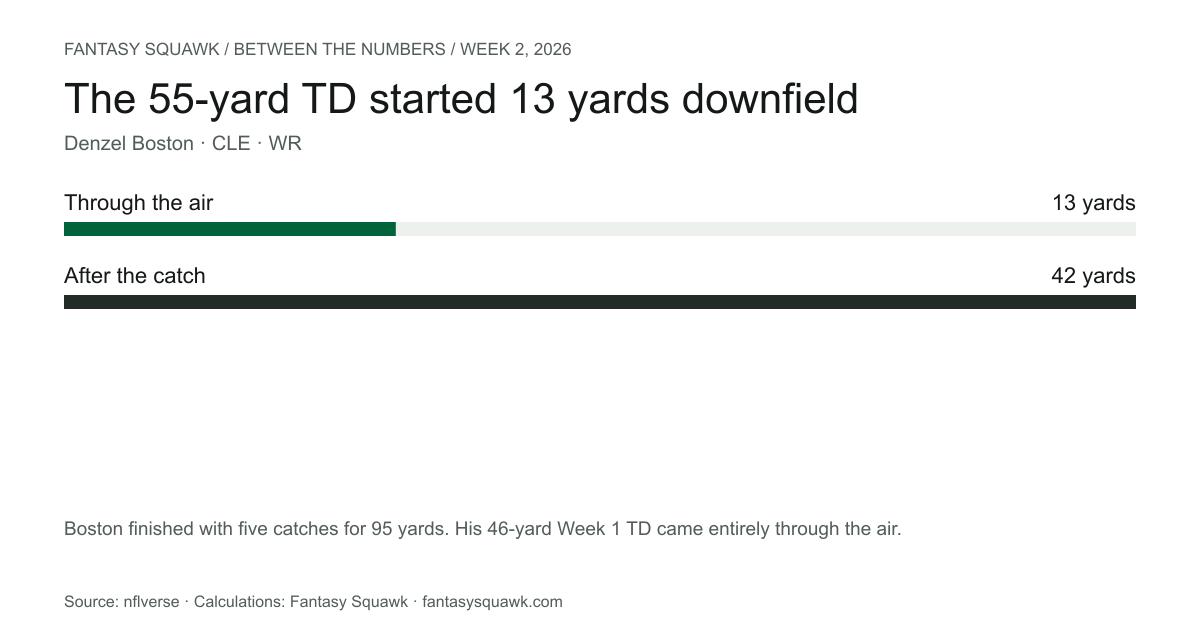
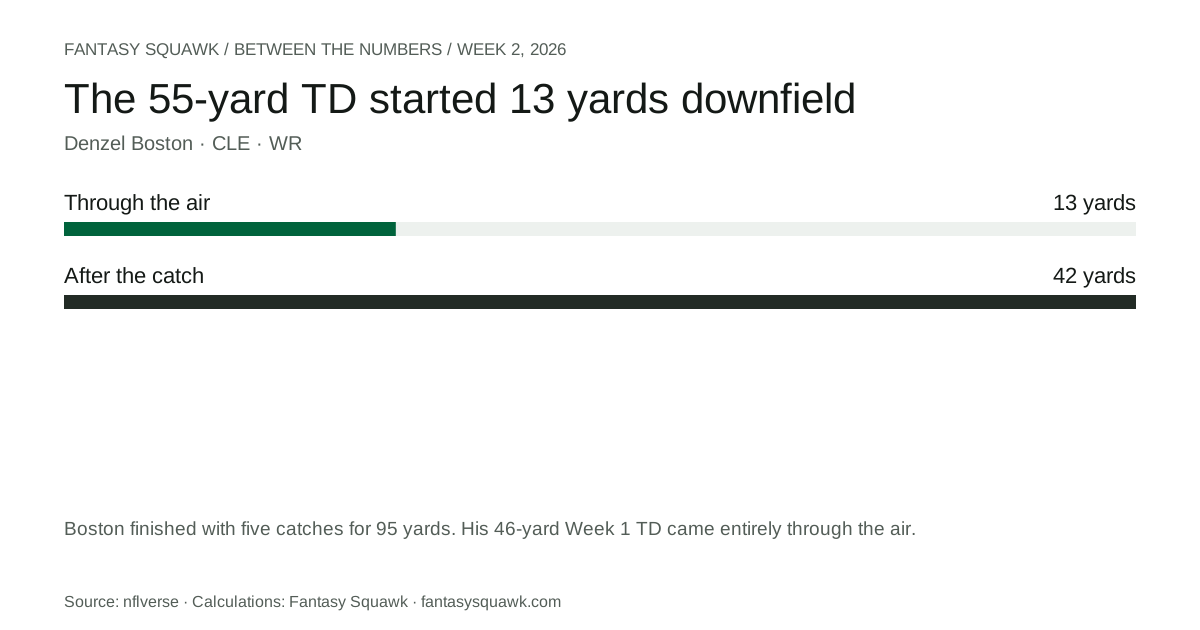
Denzel Boston's 55-yard touchdown started just 13 yards downfield.
Boston supplied the other 42 yards after the catch. Last week's 46-yard touchdown traveled all 46 through the air. Two long scores, two very different ways of getting there.
The rookie also went from four targets to seven, with five catches for 95 yards against Tampa Bay. He played 93% of Cleveland's offensive snaps, after 92% in the opener. The long touchdowns are fun; he has also been on the field for nearly everything.
See the numbers
The 55-yard TD started 13 yards downfield
Boston finished with five catches for 95 yards. His 46-yard Week 1 TD came entirely through the air.
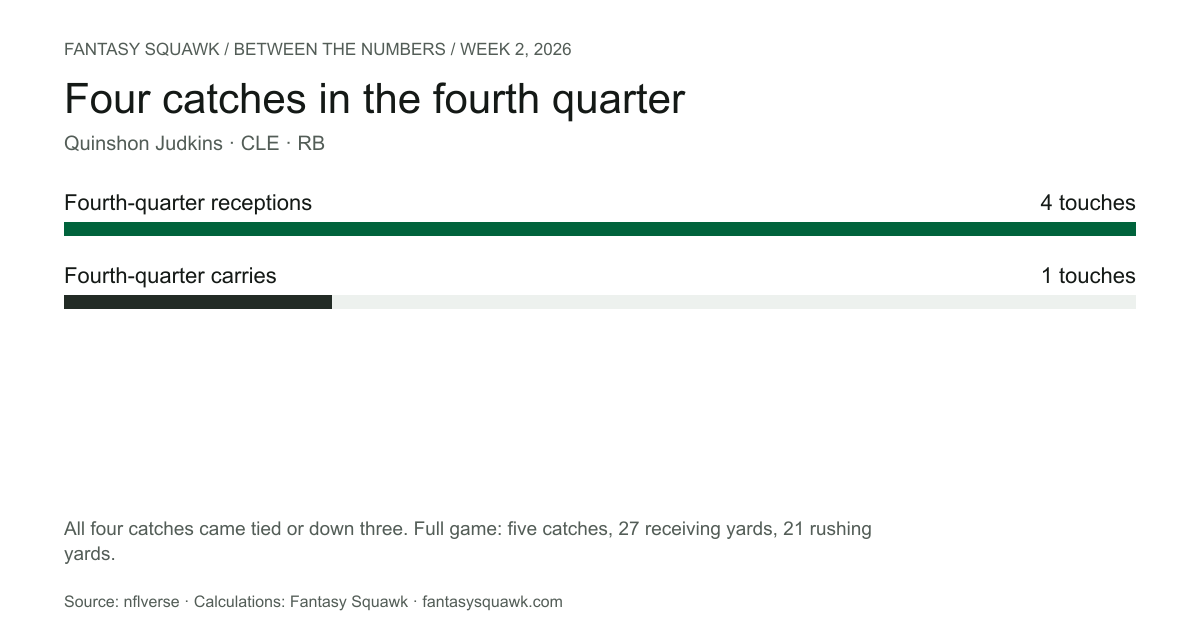
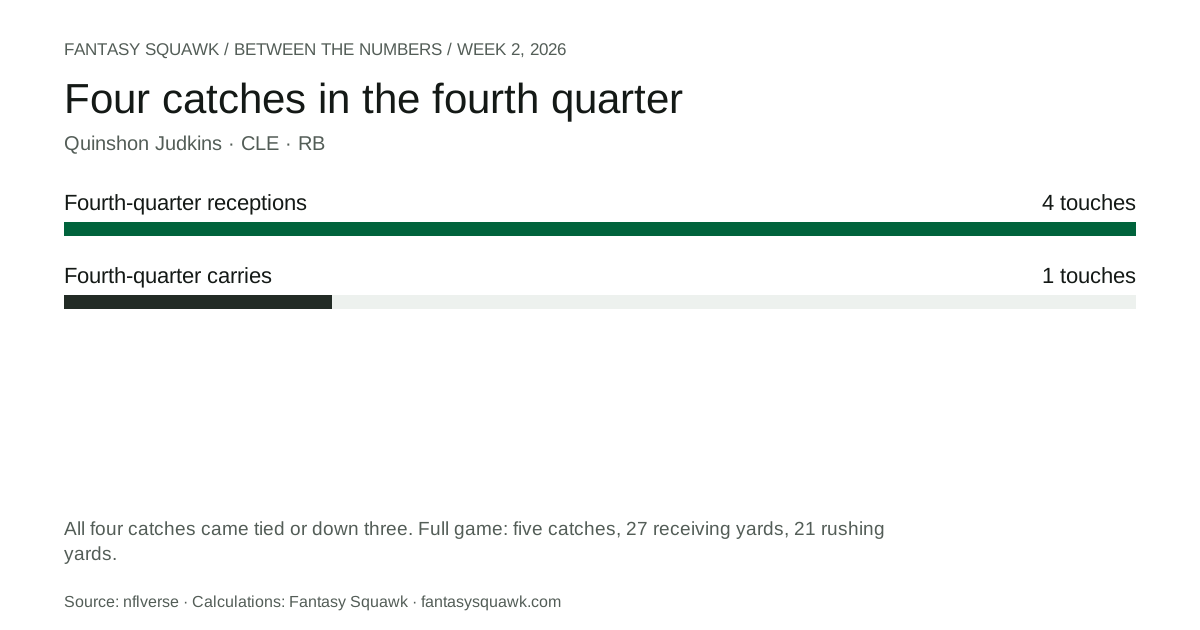
Judkins caught four passes in the fourth quarter. He ran it once.
All four catches came with Cleveland tied or down three. These were throws in a game the Browns were trying to win, and eventually did—not empty possessions after a blowout.
Last week's comments worried about Quinshon Judkins disappearing when Cleveland had to throw. Sunday gave us a little evidence in his favor: five catches on five targets, up from two in Week 1. The rushing was still rough—12 carries for 21 yards—but his receiving work kept him involved late.
See the numbers
Four catches in the fourth quarter
All four catches came tied or down three. Full game: five catches, 27 receiving yards, 21 rushing yards.
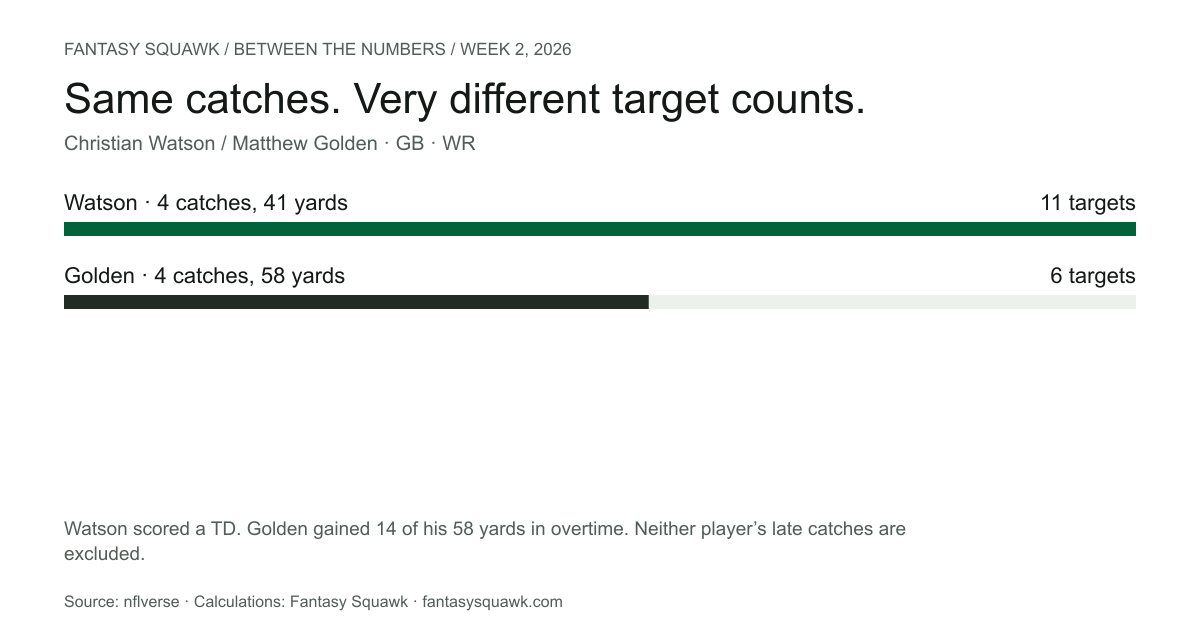
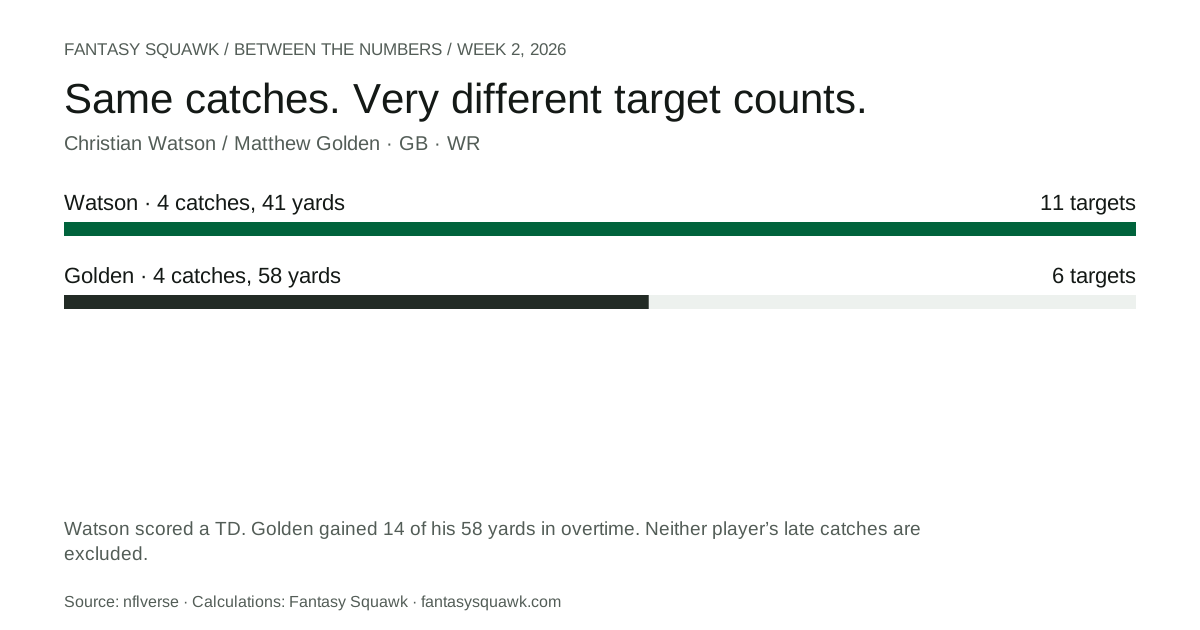
Golden matched Watson's four catches on five fewer targets.
Christian Watson needed 11 targets for four catches and 41 yards. Matthew Golden got four for 58 on six targets. Watson caught the touchdown, so he still won the fantasy comparison.
For everyone following last week's Golden discussion: his targets fell from 12 to six, even as his snap share rose from 82% to 86%. His final 14 yards came in overtime and count here, just like the late catches last week. The weekly target split swung toward Watson; the playing time held up for both.
See the numbers
Same catches. Very different target counts.
Watson scored a TD. Golden gained 14 of his 58 yards in overtime. Neither player’s late catches are excluded.
Odunze's playing time nearly doubled. Raymond still got more targets.
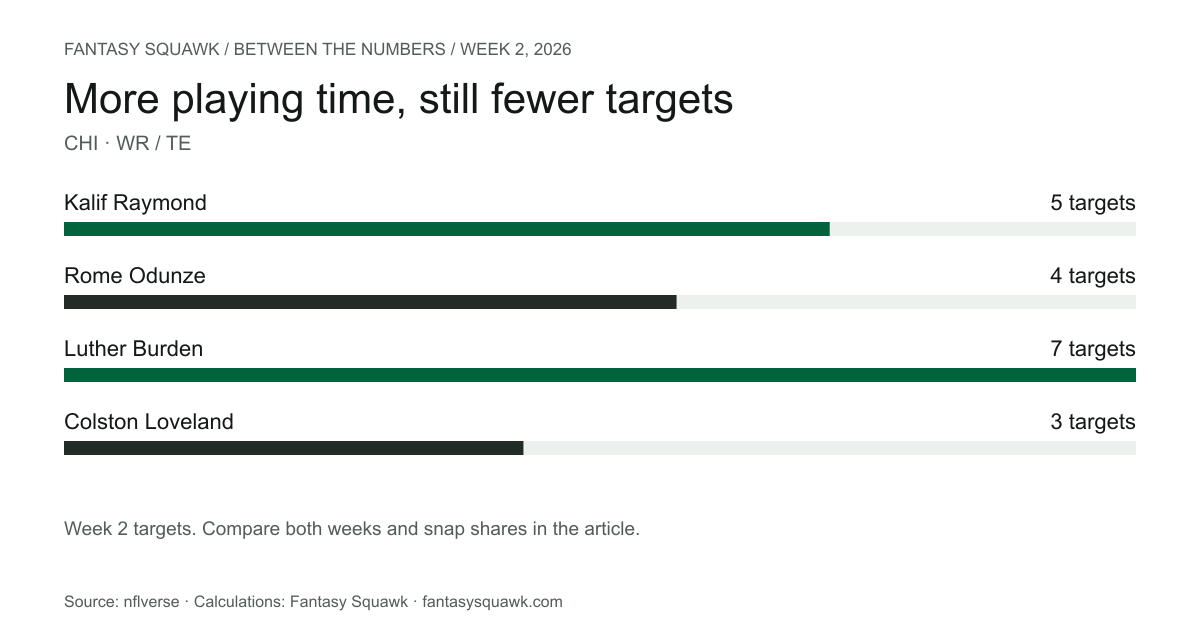
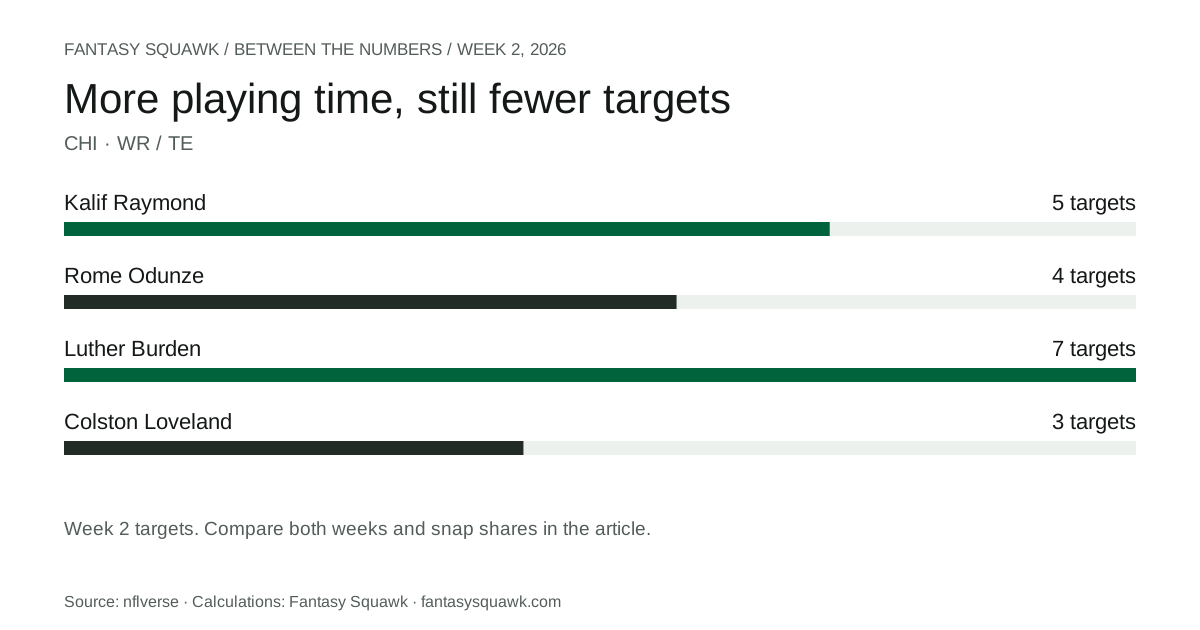
Rome Odunze's snap share went from 48% to 84%. He still trailed Kalif Raymond, five targets to four. Luther Burden led Chicago with seven.
Bears fans were right to flag Rome's limited playing time under last week's Raymond take. The extra snaps arrived; the predicted target flip hasn't. Chicago scored just three points in the rain, and Caleb Williams left with a hamstring injury. This game doesn't settle anyone's season-long role, either.
Compare both weeks
More snaps for Rome. Still no clear target pecking order.
| Player | Week 1 | Week 2 |
|---|---|---|
| Kalif Raymond | 9 | 5 |
| Rome Odunze | 3 | 4 |
| Luther Burden | 5 | 7 |
| Colston Loveland | 2 | 3 |
Selected Chicago receivers. Targets include incomplete passes.
Week 2 targets. Compare both weeks and snap shares in the article.
Sources & how we counted
Checked September 23, 2026. These are selected details from the 2026 regular season, not league-wide records or player rankings.
- nflverse play-by-play supplies the play sequence, clock, field position and score before each play. Targets, catches, carries, yards and touchdowns reconcile to weekly player statistics for all 25 players in the evidence file, in both weeks. Houston's WR comparison includes every wide receiver in its Week 2 statistics, with individual totals in the download.
- Offensive snaps come from nflverse snap counts. Percentages are rounded as supplied. Snaps include plays without a route and don't establish coverage assignments.
- Week 2 targets, catches, carries and yardage were independently checked against Sleeper's box scores for 17 of the 25 players. The other eight reconcile across the two nflverse datasets; the download identifies the independently checked players. ESPN's scoreboard confirms all 16 games are final.
- Targets exclude throwaways, deleted/nullified plays and two-point attempts. Carries exclude kneels. Running-back totals exclude QB, WR, FB and TE runs; Barner's carry is counted separately. Red-zone targets start at the opponent’s 20-yard line or closer; they are not necessarily throws into the end zone. Full PPR awards one point per catch, with no yardage bonuses here. “Inside the five” means the one- through four-yard lines.
- Game context is linked in the relevant sections. Denver's postgame notebook also describes Coleman's closing possession. A one-game workload is an observation, not a promise about next Sunday.
Download the calculations and selected plays. Source hashes are included; providers may make later corrections.
Catch up on Week 1, or check the Week 2 Experts vs. Vegas results.